Sunday, June 23, 2013

[Sound Familiar?]: Sampling, Break Beats and Blaxploitation

I’ll start by saying that I don’t consider myself a hip hop head. I’m surely no aficionado spouting off knowledge from the hip hop canon. However, I can say that the first rap album that I touched and heard as a little girl was Sugarhill Gang’s Rapper’s Delight. It belonged to my aunt or mother.  Of course, what I did not know was that the song’s main structure had come from the break of Chic’s Good Times. The intro of Rapper’s Delight was sampled from Here Comes That Sound by Love De-Luxe. What makes the break beat significant? In his book, Making Beats, Joseph G. Schloss quotes Tricia Rose who states that:

The break is a section where the band breaks down, the rhythm section is isolated, basically where the bass guitar and drummer take solo.  Break beats are points of rupture in their former contexts, points of which the thematic elements of a musical piece are suspended and the underlying rhythms are brought center stage. (qtd. in Black Noise 74)

The breakbeat Sugarhill used consisted of a strong groovin’ baseline, drum and a clap. They took it, looped it and rhymed over it. Good Times had been heavily exploited as a break beat. Some groups even used a derivative of its baseline to form the melodies for their songs.


Later, in my years I came to understand that most of the hip hop sound that I grew up listening to came from music that was created before I was born. From jazz to funk to the most obscure rare tracks that could be excavated-hip hop producers were repurposing old art. They found a way to reconstruct the incredible music that they grew up appreciating. In many cases they became “diggers” seeking out undiscovered and unexploited breaks.


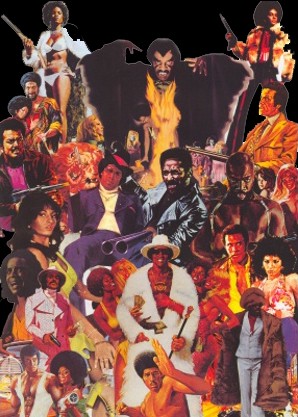
The soundtracks of the blaxploitation era were not overlooked. Blaxploitation films extended deeply within black culture. The styles of the characters were emulated by the everyday brotha and sistas on the streets.  They were able to see the power that emanated from the screen. There were black heroes and sheroes. Many of the early hip hop producers grew up in the 70’s during the heightened era of the genre.  Dudes like John Okuribido, I can only assume, is sharing his childhood fondness for the film Three Tough Guys by sampling Isaac Hayes’ Hung Up On My Baby in Geto Boys’ Mind Playing Tricks On Me.  You’d be surprised how many hip hop joints you’ve listened without hearing the origins of the tracks from which they have been recreated.

Music from the blaxploitation OST has certainly been transformed into a new form of expression through hip hop.  Sampling is an art form that pays homage to original works, which had their own cultural significance. Contemporary artists are just restructure archetypes by bringing their current cultural relevance to the music. More to come...

Tuesday, June 18, 2013

Put Your Weight On It Episode 1


Put Your Weight On It: Episode 1
I.
Threshold-Things Are a Changin’
1. Dizzie Gillespie-The Cool World: Duke’s Fantasy
2. Booker T. and the MG’s-Uptight: Cleveland Now
3. Gordon Parks- The Learning Tree: My Baby’s Gone
4. Galt McDermot-Cotton Comes to Harlem: Cotton and Ed Gravedigger


The Threshold is comprised of songs that come from soundtracks of black films that are predate the  “blaxploitation” era bringing a new narrative to black audiences.The films introduced black audiences to characters that were a departure from the stereotypical depictions of sambo and mammy.  These were fully black cast films.  The characters were more rounded dimensional portrayals of black folks and not the “ebony saint” roles of Sidney Portier of the early 60’s. These particular films were made in the late 60’s to early 70’s.
Funk was a burgeoning genre and had not yet been the cool undercurrent paired with the black film. The soundtracks of this time had a little bit of edge creating a narrative that expressed the characters. The musicians were able to capture the spirit and varying moods of these films. The film composers during this period consisted of jazz musicians, rhythm and blues bands, musical theatre composers, and soul musicians. The funk had not hit the fan yet. Quincy Jones, who scored numerous films during the time, was probably closest to creating outside of the box when it came to spicing up the soundtrack. Also, Herbie Hancock’s Fat Albert Rotunda (69’) was a nice departure from the standard cinematic/romantic format.


II.
Genesis-Power of the People
5. Melvin Van Peebles, Earth Wind and Fire-Sweet Sweetback’s Badaasss Song: Hoppin’ John
6. Isaac Hayes-Shaft: Cafe Regio’s
7. Curtis Mayfield-Superfly: Junkie Chase


The songs selected for Genesis defined the blaxploitation era. They started it all and had a significant impression on black cinema. We get a real feel for that funk and soul sound. Funk was about freedom. Funk was revolution. It countered everything that was deemed normal by American standards. Sweetback was the first film to add funk music brought to you courtesy of a then little known band Earth, Wind, and Fire. The music was distinctly black giving a voice to urban life. The sound also contributed to the conceptually abstract presentation of the film acting as an interwoven element to the entire production. With Sweetback, one can not separate nor distinguish the music from the film; they are equally relative to all of the elements that make Sweetback an entire work of art.
Isaac Hayes brings hot buttered soul sounds to Shaft.  The music was far more successful than the film itself winning an Oscar in 1972 for the title track.  This soundtrack, scored by Hayes, had the musical backing of the funk band The Bar-Kays (if you don’t know their history, look them up).This soundtrack was not as conceptual as Sweetback. However, the songs are quite varied in style giving the score a solid sound from start to finish.  Here is where we first get a taste of the wah wah guitar, fast rhythmic hi hats, heavy horns, and thumping bass. Shaft gave us the formulaic chase grooves, love songs, character theme tunes, etc. that continued to be the composition of blaxploitation soundtracks to come.
And then we have Superfly, the ultimate blaxploitation soundtrack.  This score is brilliant simply due to the fact that it has a finessed social commentary that accompanies the visual.  Mayfield paired his melodic grooves with lyrics that made you think. His score was also extremely unique due to the fact that it has an emotional quality. Mayfield evokes empathy for the characters in songs such as Freddie’s Dead. Curtis Mayfield went scored several films in the blaxploitation genre.  


III.
Right On!-The Essentials
8. Marvin Gaye-Trouble Man: “T” Stands for Trouble
10. Gene Page-Blacula: Movin’
9. Roy Ayers-Coffy: Aragon
10. James Brown-Black Caesar: Down and Out In New York City
11. Willie Hutch-The Mack: Mack’s Stroll/The Getaway
12. J.J. Johnson-Cleopatra Jones: Go Chase Cleo
13. James Brown-Slaughter’s Big Rip-Off: Tryin’ To Get Over
14. Dennis Coffey-Black Belt Jones: Love Theme
15. Rudy Ray Moore-Dolemite: Mayor’s Get Away
16. Willie Hutch-Foxy Brown: Foxy Lady

This selection of songs for The Essentials come from films that are staples in the genre of blaxploitation. They consist of some heavy hitting funky soulful sounds, which is the essence of the blaxploitation soundtrack. Quite a range of artists made their contribution to these soundtracks such as James Brown, J.J. Johnson, Gene Page, Marvin Gaye, and Roy Ayers all of whom are musical geniuses in their own right. They bring sophistication, grit, and savviness to the music. The sounds are a style all their own.  Many musicians were able to flex their musical skills while stretching their musical creativity beyond the general scope of their own standard. The soundtracks are authentically black; culturally enhancing our stride, the way we speak, dress, and boogie.  These artists creates timeless sounds that elevate the simplicity of the blaxploitation narrative. The music rivaled the dominating funk bands of the time and definitely carved out a niche in black music history.

Wednesday, May 29, 2013

Coming June 2013


Put Your Weight On It is a podcast series that focuses on the blaxploitation OST genre. The sound set a precedent for a visual auditory merging that shaped black culture in an unforgettable way. It is no secret that the music was just as popular as the films. Much to my surprise, there is very little historical or analytical information focusing specifically on the music created during the period. I've made it my mission to collect all soundtracks from the period from original presses to later releases. Put Your Weight On It is an exploration and analysis of the scores that I've collected. I've collected a priceless treasure of soundtracks that helped elevate blaxploitation films to a new level and increased the genre’s popularity. This podcast also acts as a means of preservation and dissemination. The goal is to hip folks to the the importance of the music of the era. Episode 1 will be comprised of three segments:

I. Threshold-Things Are a Changin'
II. Genesis-Power of the People
III. Right On!-The Essentials

Look for it! Spread the word! Gratitude for your support!

Thursday, May 9, 2013

The Significance of Preserving the Blaxploitation Soundtrack


For those hip hop heads out there, much of the music that we consider the classics, are rooted in the scores of blaxploitation cinema. Point blank, producers have sampled some of the most dynamic enriching funky tunes from the era establishing the fundamentals of hip hop.
The music is relevant to a period when social and political conscious was shifting in the black community. The sounds were starting to reflect the times.  Funk was making its way within the spirit of the people; particularly those who were on the bottom side of the caste system, poor black folks (also known as the blues people). With the assassinations of MLK and Malcolm X, upheaval was inevitable. Change permeated the atmosphere. A revolutionary ideology was espoused by many black youth along with Marxist intellectuals.  

Funk, which has a genealogy that consists of: blues, gospel, be-bop, rhythm&blues, rock&roll, and soul was becoming the voice of objection. It was a countercultural antithetical entity of bold polyrhythmic expression. Funk was the soundtrack of revolution. The music represented freedom from systematic oppression. Because funk was incongruous with the standards of the American way, it was the perfect genre to underscore blaxploitation films.  Blaxploitation films were intended to reflect a black power, freedom, and slough off the stereotypical tropes of the past. The often funky soundtracks of blaxploitation were the soul and musical impressions of the movies which quickly became formulaic in narrative.

Blaxploitation soundtracks were definitely appropriate for the times. They hold a valuable space in the lineage of our American musical ancestry.  In his epic book that explores all that is funk, Rickey Vincent states:

The soundtrack album ultimately served two extremely important functions: first, like the films in general, soundtrack albums gave jobs to struggling artists who may not have had the opportunity to release and distribute a record on their own.  Second, and most significant, the range of the movie soundtrack allowed the artists to explore-and reflect-the diverse moods of the film and thus the diverse moods of their people.

It is indeed necessary to preserve the cool, boundless, and funky musical narratives that are the blaxploitation soundtracks. They have offered so much to en rich our culture. They were a way to express the blackness of a people. We also must make sure that future generations understand the primary source of contemporary music and how relevant it is to way that music can be shaped in the future. As the saying goes, you have to know your past in order to be prepared for your future-there is power in that. 

Thursday, March 14, 2013

Blaxploitation: A Brief Overview  
written by Mekeva “Keva” McNeil of Analog Enlightenment 
for the upcoming Podcast series Put Your Weight On It (debuts June 2013)

Like to Hear It...Here It Go...


The Civil Rights Era was still lingering in the air as the decade of the 70’s began to take its reign. Only a few years prior were black folks fighting for their humanity at the risk of being beaten and tormented. The year was 1971,  Marvin Van Peebles wrote and scored the film Sweet Sweetback’s Badass Song. Simultaneously, Gordon Park’s Shaft was in production. The not yet coined “blaxploitation” film genre was on the rise. 
These films made a way for black actors, writer, musicians, and directors to take their turn at the helm to create something that belonged to the people. There was a “no holds bar” attitude that emanated from the narratives through the renegade characters that were seen as heroes.  
There were over 300 hundred films made within a 5 year span.  Blaxploitation films cost anywhere from $150,000 to $500,000 to make which was considered low budget.
However, these films grossed millions of dollars.


What’s In A Name?

The term “blaxploitation” was seen as pejorative.  It is, obviously, a hybrid of the words black and exploit. Many opponents of these films felt that black folks were being exploited and did not care for the “stereotypical” representations of blacks on the screen. Junius Griffin, who was the president of Beverly Hill’s NAACP was responsible for coining the namesake that now easily identifies that imperative time in black cinema.
Many people were not up in arms over the blaxploitation labeling. There was was the sentiment of empowerment held by the black community.  A sense of pride imbued black audience members who had the opportunity to see black men and women in control, wielding authority. They got to see black men and women taking control of and adapting to often touchy situations.
Another way to spin the term blaxploitation comes from the fact that the studios producing the films exploited them as a means of revenue. Due to white flight, whites moving to the suburbs, many hollywood studios were suffering.  Sweetback, Shaft, Superfly, Foxy Brown, etc. were raking in major money. Ultimately, studios took that money and made more white films with it. Therefore, exploiting the success of the black genre for their financial gain.


The Heart and Soul is Music

The blaxploitation era would not be what it is without music.  Tremendous contributions were made via artists such as James Brown, Issac Hayes, JJ Johnson, Curtis Mayfield and countless others. The soundtracks were tailored specifically for a movie.  It packed explosive funk with breaks, horns, orchestration, guitar riffs, and unforgettable bass lines.  Much of what we hear (mainly through sampling) in hip hop today emerged from the brilliant sounds created during that brief, yet productive,  period in time. Music created an emotion that carried the films. People were able to relate to the narrative through a constructed conceptual system of rhythms. Whether through a theme, chase, or love song...the blaxploitation soundtrack was a congruous element of storytelling. The blaxploitation era has made great cultural contributions to the black community by shaping identity and defining much of what is relevant to our music today.